

How to Help an Alcoholic Husband or Son
- Benefits checked with his name, date of birth and plan
- A clinician tells you which level of care actually fits
- Weekly written updates and Sunday visitation once he is here
- A men’s program in Arizona, around ninety days, one clinical team
5.0 on Google
Confidential. No pressure to commit.
We work with TRICARE West, BCBS, Cigna,
Aetna and UnitedHealthcare
We do not accept Medicare or Medicaid












Before he agrees to anything
How to Convince Someone to Go to Rehab
- 01
Find out what his insurance covers
Verification needs his name, his date of birth and his plan, which you probably already have. Admissions runs it and tells you what the benefits look like.
Verify his benefits - 02
Work out which level of care fits
Describe what the last six months actually looked like. A clinician tells you whether that is residential, PHP or intensive outpatient, and whether he needs a detox first.
Compare the levels of care - 03
Know how he would get here
Most men travel in. Flights land at Phoenix Sky Harbor and someone collects him. If he asks how this would even work, have the answer in the room.
How coming from out of state works
How to Help an Addict Without Enabling Him
- Paying for the consequences is the one families find hardest to stop, and the one he notices first
- A boundary he can predict does more than a boundary he can argue with
- Knowing the cost, the dates and the travel removes the excuses before he reaches for them
- Family therapy here happens with his own therapist, so the two of you are not working from different stories
Interesting reads to help you decide
These are the pieces families here actually arrive on, and any one of them will tell you more about how this works.
What he would be walking into
What a Men's Rehab Week Actually Looks Like
Worth knowing before you describe it to him. The version in his head is almost certainly a lockup.
He keeps his phone
No blackout period, nothing confiscated. Phones go away during therapy and nowhere else.
Two therapy sessions a week
A primary therapist he sees twice a week, with EMDR and trauma work, plus weekly case management.
Church Sunday, Bible study at night
The men go to service together. It is nondenominational, and nobody is made to perform a faith he does not have.
Men only, every level
Residential through outpatient. Men tend to say the true thing faster in a room with no women in it.
While he is here
Staying in Touch While He Is in Treatment
Family contact is built into the week rather than left to chance. One limit on it is worth knowing now.
A written update from his case manager every week, including once he moves into sober living
Visitation on Sundays, every week
Family therapy with his own therapist, by video if you are out of state
One release of information, signed by him, is what lets us speak to you at all. He is an adult, so that signature is his to give
Questions
Being the Wife of an Alcoholic: Common Questions
What you can check without him, what you will be told once he is here, and what happens when he refuses.
Still not sure?
Admissions answers around the clock.
Call (928) 378-3599Confidential. No pressure to commit.
- He will not go. Is there anything I can do?
- Willingness is the only real requirement here, and it is the one thing nobody can hand another adult. What you can do is remove every obstacle he will reach for: know what his insurance covers, know which level of care fits, know how he would get here. Men arrive at that decision on their own timeline, often after somebody in their life spent months quietly doing the groundwork. That groundwork is not wasted. It is usually what makes yes possible when it comes.
- Can I check his insurance without him knowing?
- You can find out what a plan covers with his name, his date of birth and the plan details, which is information most wives and mothers already hold. Admissions will tell you what the benefits look like and whether anything would be owed up front. He signs for his own treatment when he is ready, and he signs a release of information before anyone here discusses his care with you.
- He has been to treatment before. Why would this be different?
- A second or third attempt is the normal case here. What usually went missing is the trauma underneath the drinking and the length of the stay. Care here runs around ninety days rather than twenty-eight, residential steps down through PHP and IOP rather than ending, and EMDR and trauma therapy run the whole way through.
- What will I be told while he is in treatment?
- His case manager sends a written update every week, including once he has moved into sober living. There is visitation on Sundays and family therapy sessions can be scheduled with his therapist, over video if you live out of state. All of that depends on him signing a release of information first, because he is an adult and the law treats his treatment as his to disclose.
- I am the one paying. Does that change anything?
- It changes what admissions can discuss with you about cost and benefits, and nothing about what they can discuss about his care. Money questions are yours if the policy or the payment is yours. Clinical questions still need his signature. Admissions will be straight with you about which is which rather than letting you find out later.
- Do you run interventions?
- No, and we will not sell you one. Holdfast does not employ interventionists. What admissions will do is talk through what you are walking into, tell you honestly whether what you are describing sounds like it needs a medical detox first, and be reachable when the conversation goes better than you expected. If you want to read about formal interventions, the guide is Effectively Staging an Intervention.
- Does he have to be a Christian?
- No. Men arrive doubting, angry at God, or with no faith at all. The program is built on Christian ground and nobody signs a statement of faith to get in. If his resistance is to the faith part specifically, that is worth saying out loud on the call rather than working around.
- Can he keep his job?
- Many men do. Most use paid leave, FMLA or short-term disability to cover the residential stage, and we provide whatever documentation an employer or HR asks for. Once he steps down to outpatient, the schedule is built so work and family sit alongside it.
Where to go from here
The Answers He Will Ask You For
Whichever question he opens with, the page that answers it is here.
Levels of care
Residential through outpatient, around ninety days, one clinical team.
Levels of careResidential treatment
The live-in stage, delivered by AnchorPoint in Arizona.
Residential treatmentDoes he need detox first?
What withdrawal needs medical supervision, and what admissions does about it.
Does he need detox first?Insurance and benefits
The plans we work with, and what a verification actually tells you.
Insurance and benefitsA Christian program
Church, the twelve steps and trauma therapy running together.
A Christian programAfter he comes home
Sober living, outpatient and the alumni brotherhood that follows.
After he comes home
What does not change
Constant at Every Level
Embedded in the clinical program at every level of care.
 Our clinical modelNeuroFaith™Our clinical model, co-authored by Holdfast co-founder Tim Hayden and published as a book. It pairs neuroscience with Christian faith: brain mapping, polyvagal-informed therapy and EMDR alongside Bible study and spiritual mentorship.
 Strength and recoveryThe Resilience LabA fitness room and a recovery room, run by Bobby Figueroa, who spent twenty years in the US Army, much of it in Special Forces. Strength training, plus cold plunge, saunas, red light and vibration. AnchorPoint clients are brought here to use it.
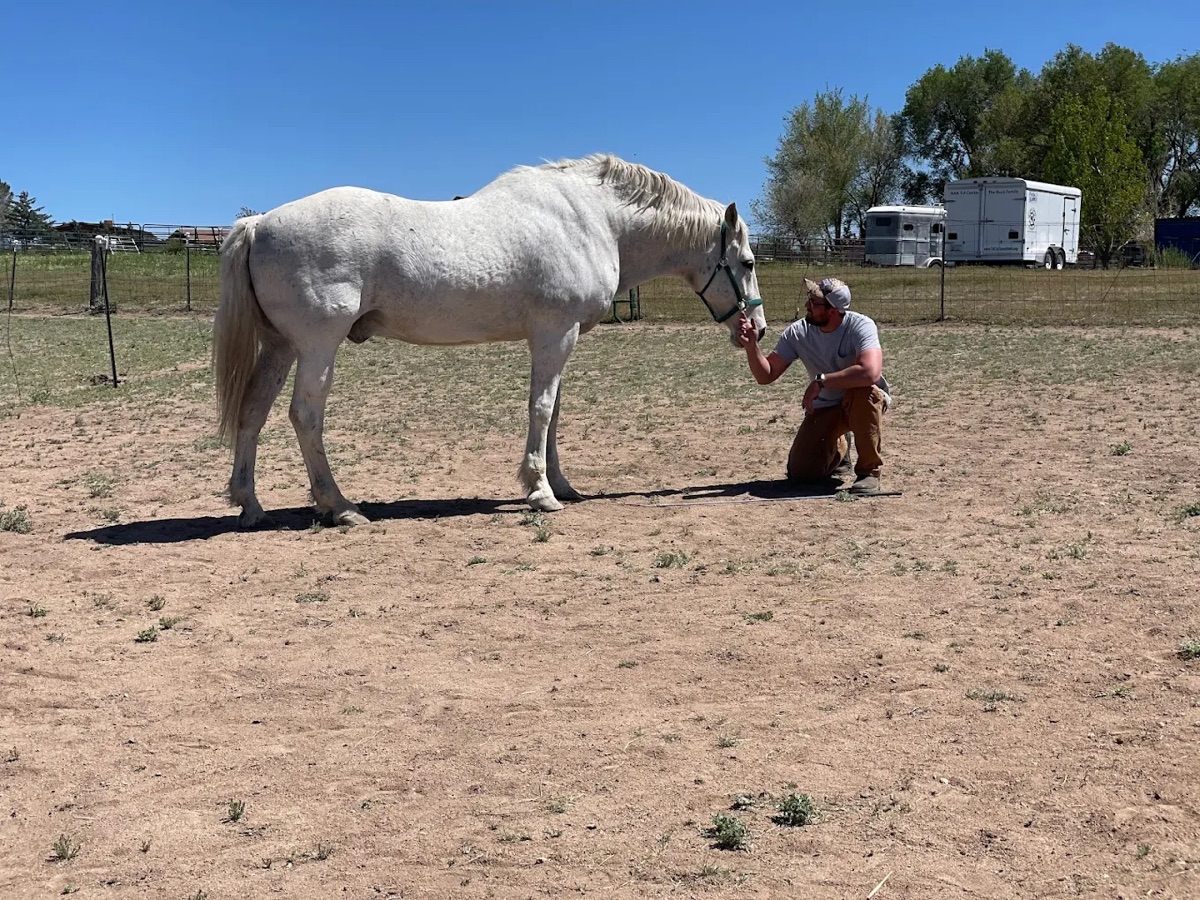 Named by the client as a selling pointEquine therapyReal horses, on open ground, as part of the week rather than a novelty. A real herd on open ground, and for a lot of men the first hour in months where nothing is being asked of them in words.
 Outdoors, most daysAdventure therapyHikes, canyons and lake days across northern Arizona. This is an open program, not a locked facility, and the outdoors is in the schedule rather than offered as a reward at the end of it.
Compare every level of care or call and let admissions place you.
Insurance
The Plans We Work With
Coverage varies by plan. If your carrier is not shown, ask rather than assume. We do not accept Medicare or Medicaid.
Free Insurance Verification
Takes about a minute · Confidential

We Have Your Details
Admissions will call you from a local number. If you would rather not wait, call (928) 378-3599 now and someone will pick up.
Call (928) 378-3599What families say
Reviewed by the Men Who Did the Work
98 reviews on Google
I was hesitant on coming to this facility, but I'm very glad I did. It definitely enforces the guidelines for building a structured life while having some freedom to still feel like a person. The camaraderie and brothers you make here helped with my recovery exponentially. The staff and therapists at Holdfast take your issues and needs to heart and assist to the best of their abilities.
 Alec ReddingVerified Google review
Holdfast was instrumental in getting my loved one on the road to recovery. Very thankful for the faith based approach while also applying expertise in the field of addiction and recovery. A wonderful ratio of providers to patients for one on one therapy and support. My loved one left after completing a 90 day program with a plan, community and a sponsor. A new lease on life! Our biggest thanks to Holdfast and prayers for the success of your future clients.
 Dana KaupieVerified Google review
HoldFast is a place where God restored me from the inside out. It’s more than a recovery program, it’s a Christ-centered brotherhood that helped me rebuild my life on solid ground. Through prayer, Scripture, and real accountability, I learned how to cling to God in every season and rediscovered my identity in Christ building a life of sobriety. I leave HoldFast renewed, anchored, and grateful for the grace and strength I found here, taking it one day at a time.
 Scott ThibodauxVerified Google review
Combination of Neuro Faith' Therapist, Christian based teachings. Listening and sharing each clients experiences and thoughts about we were being taught in group meetings. Also encouraged to go to AA meetings, Church and Bible Study. I haven't sobriety for 96 Days straight since i was 15. Daily prayer and meditation combined with the Hold Fast App daily reflection schedule allowed me to stay focused on my goals of God and sobriety. I knew no one in Prescott when I moved here, now I have a brotherhood and Fellowship of Men that 100% i can count on. I am currently on Step 11 and plan on Sponsoring others as well as continuing in volunteering for others needs and bringing others to sobriety. I have a beautiful new life now that. Hold Fast brought me back ty rean honest self. Thank you Staff. I am now closer with my family.
 Lui RodriguezVerified Google review
HoldFast Recovery is "hands down" the best treatment center I have ever been to. Between the staff and brotherhood, there is genuinely something special about this place. If you're trying to find renewed faith and become the best version of yourself, you've come to the right spot. Be prepared to put in the work!
 Cryss Cross CurryVerified Google review
Unlike no other. Holdfast has been a life saving Christian based spirit filled residential treatment center based on the 12 steps. Instead of dreading the classes and meetings I look forward to all of it. The brotherhood of men here is very strong and I’m healing Godspeed.
 Aaron EndsleyVerified Google review
Worth reading next
Written for the person holding it together.

As Iron Sharpens Iron, So One Man Sharpens Another.
Proverbs 27:17
Men walk in here out of options and walk out with a brotherhood, a purpose and something that holds. It starts with one call, and you can make it right now.
Confidential. No pressure to commit.