












The pink cloud effect describes the wave of relief, energy, and optimism many people feel in the first weeks of sobriety, before the harder work of recovery sets in. It is a well-documented shift in mood and brain chemistry, not a reward for finishing treatment, and understanding why it happens can keep early confidence from turning into risk.
What Is the Pink Cloud Effect in Early Recovery?
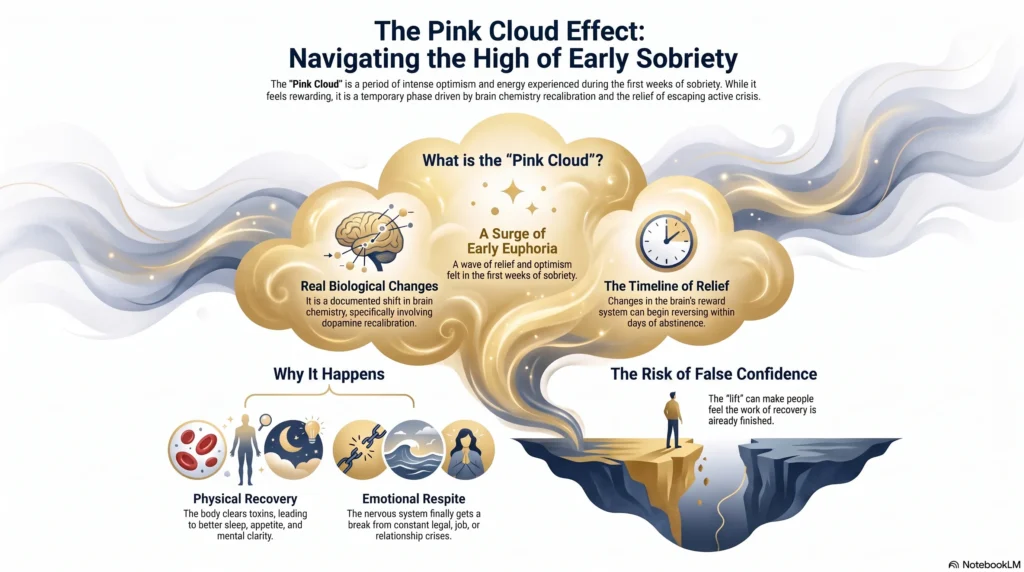
The pink cloud effect is the term recovery communities use for the burst of hope, energy, and even euphoria that often shows up in the first weeks after someone stops using drugs or alcohol.
After months or years of chaos, simply feeling clear-headed again can feel enormous. Clients in this phase often describe sleeping better, thinking faster, and feeling closer to family for the first time in a long time. The term “pink cloud effect” comes from 12-step culture rather than a clinical manual, but the experience it points to is real and well documented in addiction research.
Is the Pink Cloud Effect Actually Real or Just Recovery Slang?
The phrase is informal, but the shift it describes is not made up. Early abstinence brings measurable changes in brain chemistry, particularly in dopamine—the neurotransmitter tied to motivation and reward that substance use hijacks [1].
Imaging studies have found that some of these changes begin reversing within the first days and weeks of abstinence [2]. While no counselor will find “pink cloud” written in a diagnostic manual, the relief and improved mood it describes have a real biological basis. Clinicians take this effect seriously because the early lift can create false confidence, leading someone to believe the work is done before it actually is.
What Causes the Pink Cloud Effect?
The body starts clearing out the physical toll of substance use; sleep and appetite often improve; and the brain’s reward system begins recalibrating after being overridden by drugs or alcohol [1].
Relief from constant crisis, whether it was legal trouble, job stress, or damaged relationships, adds an emotional lift on top of the physical one. None of these changes means the underlying issues have been resolved, but it means the nervous system is finally getting a break.
Why Can the Pink Cloud Effect Be Risky for Men in Recovery?
The danger is not the good mood itself; it is what that mood can talk a man into believing. Feeling strong can lead to skipping meetings, pulling away from a sponsor or counselor, or deciding old triggers will not be a problem anymore.
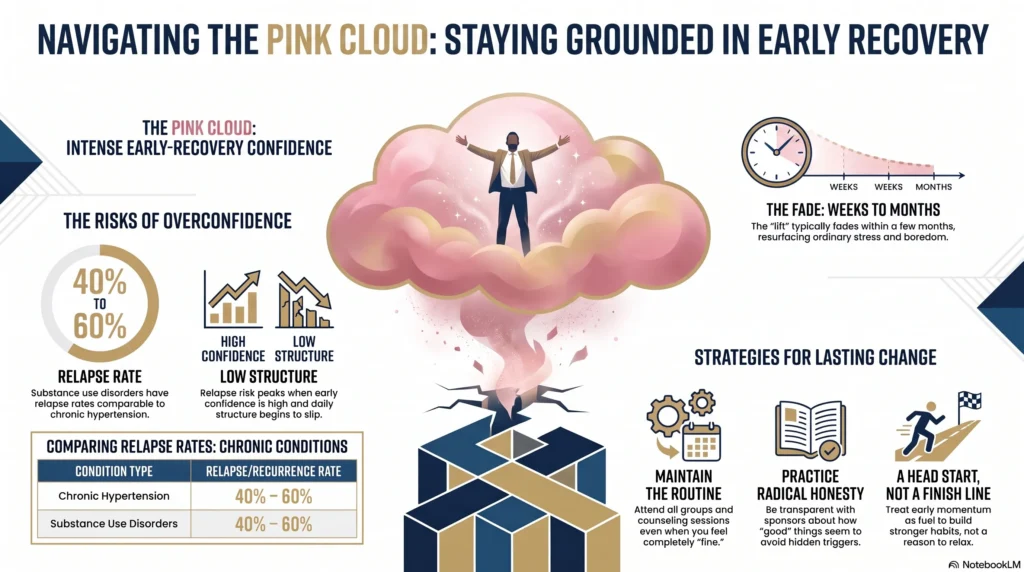
Relapse rates for substance use disorders run comparable to other chronic conditions such as hypertension, sitting around 40% to 60%, and much of that risk clusters in the early months when confidence is highest and structure starts slipping [3].
How Long Does the Pink Cloud Effect Usually Last?
There is no fixed timeline, and it varies by substance, length of use, and individual biology, but the lift often fades within a few weeks to a couple of months.
As it fades, ordinary stress, boredom, and unresolved emotions tend to resurface, sometimes abruptly. This drop is not a sign that treatment failed or that something is wrong. It fits closer to what research on relapse actually shows: setbacks and mood shifts are common data points in a longer process, not proof recovery is failing [4].
How Do You Stay Grounded During the Pink Cloud Phase?
Clients who get through the phase follow these positive patterns:
- Keep attending groups and counseling even when they feel fine
- Stay honest with a sponsor or counselor about how good things seem
- Treat early confidence as a reason to build stronger habits rather than relax the ones they already have.
Motivation and readiness to change are not fixed traits; they shift with mood, stress, and circumstances [5]. Treating the pink cloud as a head start rather than a finish line is what turns early momentum into lasting change.
Men’s Addiction Treatment in Prescott, Arizona
Holdfast Recovery works with men through exactly this stage. Our Partial Hospitalization Program (PHP), Intensive Outpatient Program (IOP), and sober living programs in Prescott are built on structure, faith-centered care, and the kind of accountability that comes from other men who have been where you are.
Whether you are two weeks sober and feeling unstoppable, or the lift has already faded and things are harder than you expected, both are normal, and neither is something you have to handle by yourself.
Call our admissions team. We will give you straight answers about what treatment looks like and what your insurance covers.
Sources
| [1] | Office of the Surgeon General (US). (2016). The neurobiology of substance use, misuse, and addiction. Facing addiction in America: The Surgeon General’s report on alcohol, drugs, and health. US Department of Health and Human Services. |
| [2] | Boileau et al. (2016). Rapid recovery of vesicular dopamine levels in methamphetamine users in early abstinence. Neuropsychopharmacology, 41(4), 1179–1187. |
| [3] | National Institute on Drug Abuse. (2020). Treatment and recovery. National Institutes of Health. |
| [4] | DiClemente, C. C. (2022). Relapse on the road to recovery: Learning the lessons of failure on the way to successful behavior change. Journal of Health Service Psychology. |
| [5] | Zaher et al. (2025). Relapse risk, frustration tolerance, and motivational readiness for change in substance use disorders. BMC Psychology. |