Why Men from Colder States Seek Rehab in Arizona
Learn why men from colder states seek rehab in Arizona. Use sunlight & distance to break the cycle of addiction. Contact our team today!
In this article
- 1.The Role of Environment in Addiction Recovery
- 2.How Does The Arizona Landscape Support Healing?
- 3.How Distance from Home Supports Long-Term Sobriety
- 4.Arizona Rehab for Men Accepting Clients From Washington, Colorado, Michigan, and Across the U.S.
- 5.Frequently Asked Questions
- 6.Sources
Men from colder states like Washington, Colorado, and Michigan increasingly seek addiction treatment in Arizona for one primary reason: the environment itself becomes part of the healing. For men from cold northern states, winter doesn’t just mean cold. It means grey skies that don’t lift, shortened days, a body that feels heavy and sluggish, and an inner environment that can make early sobriety feel almost impossible to sustain.
That’s part of why men leave home for rehab in Arizona. Not to escape. But to reset.
The Role of Environment in Addiction Recovery
For men attending rehab and addiction treatment in warm climates, sunlight supports addiction recovery by regulating circadian rhythms, increasing serotonin production, and promoting vitamin D synthesis. These biological effects improve mood stability, sleep quality, and emotional regulation during early sobriety [1].
For men who’ve spent months or years in active addiction, this matters more than it might sound. Fatigue and depression are extremely common in early sobriety, as the brain undergoes significant neurological repair work during the first weeks and months.
Exposure to sunlight also promotes the production of beta-endorphins, nitric oxide, serotonin, and dopamine — all of which play important roles in mood. Getting them moving through natural means, such as sunlight, movement, and outdoor structure, is part of rebuilding a baseline that doesn’t require substances to feel pleasure or function [2].
Arizona offers more sunny days per year than nearly anywhere in the continental United States. That’s not a tourism pitch; it’s a clinical advantage [3].
How Does The Arizona Landscape Support Healing?
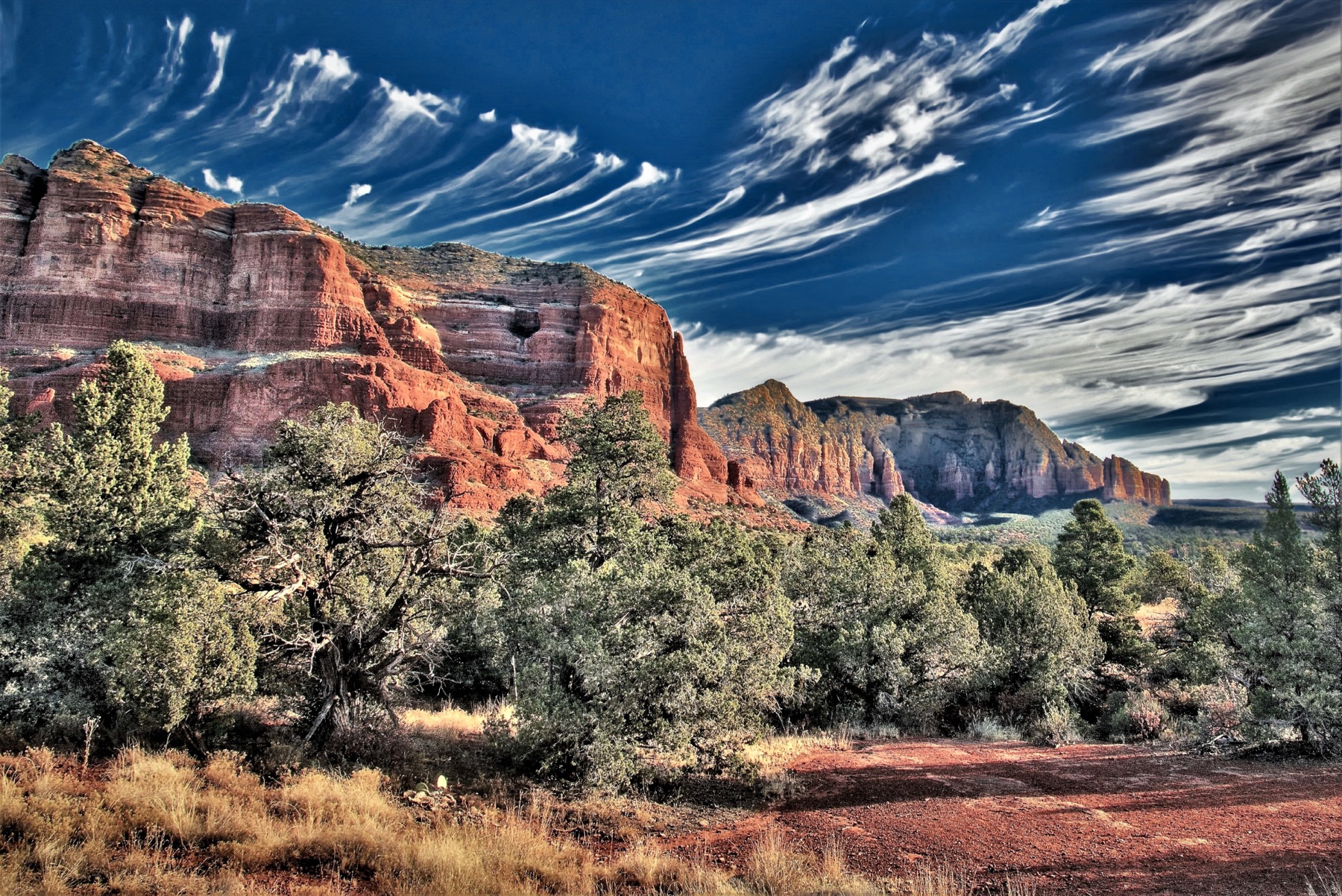
Prescott, Arizona, sits at nearly a mile in elevation in a high-desert, rugged landscape, offering an environment that many men from the Pacific Northwest and Midwest have never experienced.
The surrounding land in Prescott is home to regions considered sacred for centuries by the Yavapai and Prescott Indian Tribes, whose relationship with this territory goes back thousands of years. The high desert has long been understood as a place of ceremony, vision, and transformation [4].
The cue-routine-reward cycles that drive addictive behavior are wired into the geography of a man’s daily life through the routes he drives, the neighborhoods he passes through, and the faces he sees. Being removed from that environment doesn’t just change the surroundings; it interrupts the neurological patterns that have been running on autopilot for years [5].
How Distance from Home Supports Long-Term Sobriety
Traveling out of state for treatment creates a space free of temptations, triggers, and distractions. There’s no slipping home on a weekend, no old friends showing up, and no negotiating with an environment built over years of memory and association.
There’s just the work and the space to do it without the constant reminders or triggers of everything familiar.
Benefits of Traveling for Addiction Treatment
Complete separation from triggers and familiar environments: The people, places, and routines tied to substance use don’t follow clients across state lines. That physical separation gives the nervous system room to reset in a way that local treatment rarely allows.
Reduced risk of early dropout: Men in treatment close to home face constant temptation to leave. Distance creates a natural boundary that supports program completion, and program completion is one of the strongest predictors of long-term sobriety.
Privacy and anonymity: Traveling out of state means no risk of running into a colleague, neighbor, or acquaintance. For professionals, fathers, and men in visible roles, that anonymity makes honest participation in treatment significantly easier.
Access to specialized care: Traveling for treatment opens access to programs specifically built for his needs, whether that’s faith-integrated care, trauma-focused treatment, or a men ‘s-only environment with a clinical depth that local options simply don’t offer.
Arizona Rehab for Men Accepting Clients From Washington, Colorado, Michigan, and Across the U.S.
At Holdfast Recovery and our brother program AnchorPoint, we’ve worked with men from across the country who arrived carrying the same things — years of unresolved trauma, substances that stopped working long before they stopped using them, and a quiet sense that the programs closer to home weren’t going to be enough.
Our men’s residential program in Prescott, Arizona, combines medically supported detox with individualized clinical care, faith-integrated treatment, evidence-based therapies including CBT, DBT, and EMDR, equine therapy, physical training, and a brotherhood of men doing the same hard work of recovery.
Contact our admissions team for a private conversation to see whether our treatment programs are right for you or a loved one.
Frequently Asked Questions
Is it worth traveling to Arizona from another state for addiction treatment?
For many men, it’s the single most important decision they make in their recovery. Local treatment keeps men close to the triggers, relationships, and environments tied to their use. Research consistently shows that separation from those cues significantly improves treatment outcomes. Men who travel to Arizona for rehab at Holdfast Recovery consistently cite the distance itself as one of the most clinically valuable parts of their experience.
Does my insurance cover out-of-state rehab in Arizona?
In most cases, yes. PPO insurance plans provide out-of-network benefits that cover residential treatment regardless of state. Holdfast Recovery accepts TriWest, GEHA, Cigna, Aetna, Blue Cross Blue Shield, UnitedHealthcare, and more. Our admissions team verifies your specific benefits same-day, free of charge, so you know exactly what you’re covered for before making any decisions.
How do I get to Prescott, Arizona, from another state?
Prescott is easily accessible from anywhere in the country. Most men fly into Phoenix Sky Harbor International Airport, which has direct flights from Seattle, Denver, Detroit, and most major U.S. cities. From Phoenix, Prescott is approximately a 90-minute drive. Our admissions team provides complete transportation guidance and can help coordinate arrival logistics so the transition is as simple as possible.
Sources
[1] Esler, D. et al. (2002).Effect of sunlight and season on serotonin turnover in the brain. The Lancet, 360(9348), 1840–1842.
[2] Mead, M. N. (2008).Benefits of sunlight: A bright spot for human health. Environmental Health Perspectives, 116(4), A160–A167.
[3] Best Places. (2024).Arizona climate. Sperling’s Best Places.
[4] Yavapai-Prescott Indian Tribe. (n.d.).Tribal history. Yavapai-Prescott Indian Tribe Official.
[5] Quinn, M. et al. (2006).Habits: A repeat performance. Current Directions in Psychological Science, 15(4), 198–202.