












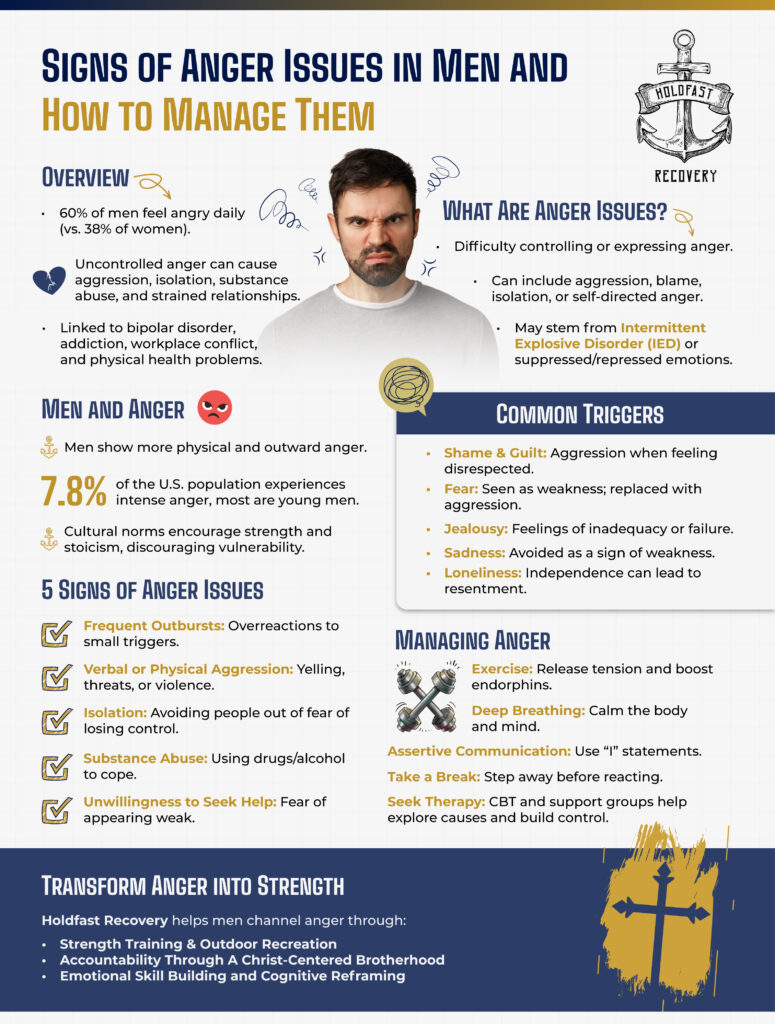
Men tend to experience and express anger more frequently, with around 60% reporting feeling angry at least once a day, compared to 38% for women.
Anger is not an inherently “bad emotion”, but without acknowledging the feelings and practicing skills to emotionally regulate, it can lead to anger issues such as verbal or physical aggression, isolation, and substance abuse [1].
Anger issues in men can lead to poor psychosocial functioning, strained relationships, and heightened risks for conditions such as bipolar disorder and addiction. Unaddressed or suppressed anger issues can also increase the risk of workplace conflicts, domestic violence, and physical health consequences.
Addressing anger issues and managing them through deep breathing, physical exercise, and assertive communication is essential for improving men’s overall well-being.
What Are Anger Issues?
Anger issues refer to challenges in controlling and expressing anger. People with anger issues often struggle with emotionally intense outbursts and may be verbally or physically aggressive. It’s also common for people with anger issues to isolate themselves, quickly blame others, and struggle with relationships.
For some, anger issues are due to a mental health condition such as Intermittent Explosive Disorder (IED) and manifest as verbal aggression or physical violence. For others, anger issues may be expressed inward, as self-inflicted anger, through substance abuse, or self-harm.
Chronic anger issues, aggression, or outbursts are also driven by suppressed or repressed anger. Suppressed anger is when you consciously bottle up anger and choose not to express it or avoid conflict. This can cause tension and irritability.
Repressed anger or other feelings, such as shame or guilt, are unconscious, and individuals are not aware of them. This is often due to trauma and can lead to physical and mental health issues.
Do Men Experience More Anger Issues Than Women?
Men and women both experience anger, however, men are more likely to exhibit higher levels of physical aggression and outwardly expressed anger. Studies found that intense and uncontrolled anger affects around 7.8% of individuals in the US, with anger being most common among young men [2].
One reason is that anger is often considered an acceptable emotion for men, as traditional expectations encourage masculine traits such as strength, dominance, and emotional stoicism. Men are encouraged to show assertiveness and sometimes aggression, often expressed as anger. On the other hand, showing vulnerability through sadness or fear is often considered a weakness [3].
Men often try to suppress softer emotions which allows anger to become the “acceptable” outlet for emotional distress. These cultural norms and stereotypes are deeply ingrained in gender roles and young boys, shaping how they learn to express emotions.
What Triggers Anger Issues in Males?
Men who experienced childhood trauma, have poor interpersonal skills, or struggle with substance abuse often have higher rates of anger issues. Men in general also tend to use anger as an unhealthy coping skill to hide vulnerability or insecurities.
Often, anger serves as a secondary emotion that follows another, such as fear, shame, insecurity, or sadness [4].
- Shame and Guilt: Men with anger issues are often afraid to acknowledge shame and act aggressively when they feel disrespected, shamed, or ridiculed.
- Fear: Although fear is a basic emotion actually designed to protect us during survival, toxic masculine stereotypes often perceive it as weakness and are expected to respond to threats with aggression or action.
- Jealousy: Envy in men can leave them feeling inadequate. If something is taken from them or they want something others have, they may start to feel like something is inherently wrong with them. These feelings can lead to shame and turn into anger.
- Sadness: This emotion is often linked to vulnerability, and some men may view being sad as a sign of mental weakness.
- Loneliness: Many men are committed to their independence, but this can trigger feelings of loneliness, even if they fail to recognize it. Loneliness can lower self-esteem and lead to resentment towards others or oneself.
5 Signs of Anger Issues in Men
Be mindful of these 5 signs in yourself or a loved one that can indicate anger struggles and underlying emotional challenges.
- Frequent Outbursts
Intense and frequent emotional outbursts or “tantrums” over small situations. Often, the anger doesn’t match the situation, and the outbursts can be disruptive to their relationships.
- Verbal or Physical Aggression
Unresolved anger issues can lead to verbal aggression, such as shouting, name-calling, and threats, or physical aggression, such as punching walls, throwing objects, or even harming others. These are abusive behaviors and can cause emotional distress to loved ones.
- Isolation
Men with anger issues tend to isolate themselves more due to fear of losing control or hurting others. This can cause anger at themselves or others, and reduce confidence.
- Substance Abuse
Men who struggle with anger often do not have the coping skills to regulate their emotions properly and often turn to drugs or alcohol as a way to cope.
- Unwillingness to Seek Help
Often, men are reluctant to seek professional help due to stigma and the internal pressure to appear “strong and in control”. Inability to recognize, acknowledge the problem, or seek help, can make anger issues worse and increase the risks of substance use, domestic violence, and spousal abuse.
How Can Men Manage Anger Issues?
Self-awareness, the ability and willingness to manage anger, goes a long way for men who are looking to better regulate their emotions. Five effective ways to manage anger include:
- Physical exercise and strength training release built-up tension and increase positive feelings from endorphins. Go on a run, lift some weights, or hit a punching bag.
- Practice deep breathing exercises to calm the mind and body during angry outbursts.
- Use assertive communication, express feelings using “I” statements in a calm and collected manner.
- Take a time out. Remove yourself from triggering situations and let yourself cool down before responding.
- Seek professional treatment, such as Cognitive Behavioral Therapy (CBT), to explore underlying causes or join support groups for men that can give them the strength to overcome their anger issues and face emotions head-on.
Transform Anger into Strength at Holdfast Recovery
At Holdfast Recovery, we help men address unprocessed emotions and manage their anger to become stronger leaders of love and stability at home. Our tailored treatment programs combine strength training, outdoor recreation, horseback riding, and emotional skill building to help clients release excess energy in a healthy outlet and develop positive coping strategies.
Through physical activity, guided emotional growth, and Christ-centered strength, men gain the tools to regulate anger, improve communication, and build lasting success. Take the first step toward self-transformation and contact our admissions team!
Sources
[1] Verona, E. (2011). Gender differences in emotional risk for self- and other-directed violence among externalizing adults. Journal of consulting and clinical psychology, 79(1), 106–117.
[2] Blanco, C. et al. (2015). Prevalence and correlates of anger in the community: results from a national survey. CNS spectrums, 20(2), 130–139.
[3] Doyle, J. A. 1998. Sex and gender: The human experience. McGraw-Hill.
[4] Johnson, S. 2022. Anger, Shame, Explosive Rage, and Violence: When Men Act Out Their Pain.